The Stardust in the Floorboards: Consciousness and the Physics of Historic Homes

Every home tells a story, but historic homes do something more profound: they hold a conversation across centuries.
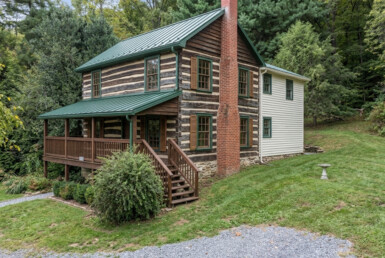
When you step across the worn heart-pine floorboards of an 18th-century hall or run your hand along a hand-carved stair rail, there is an immediate, palpable sense of presence. It leads to an inevitable question—one that spans physics, philosophy, and history alike: Can a building hold a memory?
To understand why old homes resonate so deeply with human consciousness, it helps to start not with architecture, but with physics.
The Molecular Continuum: No New Atoms
There is a fundamental truth about our universe that is as simple as it is staggering: every atom that exists on Earth today has been here for billions of years.
Except for the rare space dust or meteor that falls through the atmosphere, the universe is not making new matter for us. The iron in your blood, the calcium in your bones, and the carbon in the oak beams overhead were forged in the hearts of dying stars eons ago.
-
The oak timber harvested in 1780 wasn’t “created” in 1780—it was assembled from ancient soil, sunlight, and air.
-
The lime mortar holding together historic stonework is composed of elements that have cycled through prehistoric oceans, mountain ranges, and prehistoric life.
-
The breath of the mason who laid that foundation, the laughter of children who grew up inside those walls, and the quiet thoughts of every inhabitant who ever lived there didn’t vanish. The physical matter involved in those moments simply transformed, dispersed, and reassembled.
We live in a world of infinite re-patterning. The atoms that form a historic home today are only temporarily arranged in the shape of a house. Before that, they were part of forests, rivers, and ancient earth. Tomorrow, they will be something else.
Resonance, Memory, and Human Consciousness
Consciousness is largely our ability to perceive patterns, meaning, and continuity through time. When we enter a modern structure made of synthetic materials, the materials often feel inert—sterile, even. They lack a long earthly lineage in human hands.
Historic homes, by contrast, are composed of organic, natural materials that were shaped by human touch, tools, and intention:
-
Hand-Hewn Craftsmanship: When a timber framer uses a broadaxe to square a log, the energy, focus, and physical effort of that craftsman are embedded in the grain. The subtle, rhythmic axe marks left on a beam are physical recordings of human movement frozen in time.
-
Patina as Physical Memory: The slight dip in a stone doorstep where thousands of feet have tread is a literal graph of human life over time. It is a record of coming home, leaving for war, welcoming guests, and going about daily existence.
-
Environmental Continuity: Old houses breathe. They expand and contract with the seasons, absorb humidity, and respond to the climate around them. They are open thermodynamic systems, continuously interacting with the atmosphere, the ground, and the people living within them.
When we feel “drawn” to an old house, our consciousness is reacting to these layers of physical history. It is a recognition of continuity—a realization that we are standing in a space where time feels tangible rather than fleeting.
The House as an Extension of Mind
Philosophers often debate whether consciousness is confined entirely within our skulls or extended out into our environment. The concept of the “extended mind” suggests that our thoughts, memories, and identity aren’t just in our brains—they are anchored in the physical spaces we inhabit and the objects we interact with.
A historic home acts as an external archive of human experience. It was designed around early human rituals: the central fireplace for warmth and community, windows oriented to catch the winter sun, rooms built to scale for quiet conversation.
Living in or restoring a historic home is an active dialogue with the past. You are not just preserving wood and stone; you are participating in a unbroken chain of stewardship. You are rearranging the same eternal atoms to protect a shelter that served those before you, and will serve those who come after.
A Temporary Sanctuary
In the end, a historic home reminds us of our own fleeting place in the grand pattern. We don’t really “own” an old house—we simply hold stewardship over its current arrangement of matter.
As you sit in a sunlit room of a centuries-old home, listen to the quiet creak of the floorboards, and feel the solid weight of the plaster and stone, remember this: the house, and you, are made of the exact same ancient stardust. For a brief moment in time, your consciousness and the shelter’s physical form have crossed paths, sharing the exact same space in an ever-shifting universe.
___________________________________________