The Heart of the House: A Day by the Historic Hearth
There is a distinct stillness just before dawn, when the rest of the world is silent and the house is holding its breath.
Five in the morning. Cold floorboards. The hearth is where the day begins. It’s not just a masonry opening in a wall. It is a massive, soot-stained expanse of stacked stone or field brick, anchored at the center of the structure—a living engine around which everything else revolved.
Early hearths were never designed as decorative features. They were precision tools of survival, built with an incredible variety of forms depending on where you were standing.
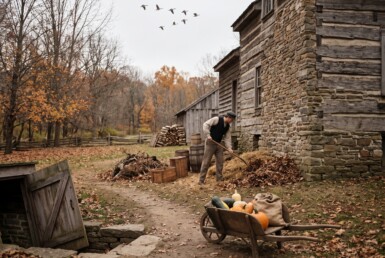
In smaller early homes or working farmhouses across Maryland and Pennsylvania, you often find the massive cooking hearth located in the English cellar—a lower-level stone room tucked partly underground to keep the heat isolated and leverage the earth’s natural thermal mass. In larger homes, to keep the oppressive summer heat from overwhelming the main living quarters during July and August, families built separate summer kitchens out back. These detached outbuildings kept the main house cool and safe from grease fires during butchering, canning, and jam-making seasons, only for the family to shift their focus back to the central indoor hearth as soon as the first November frost hit.
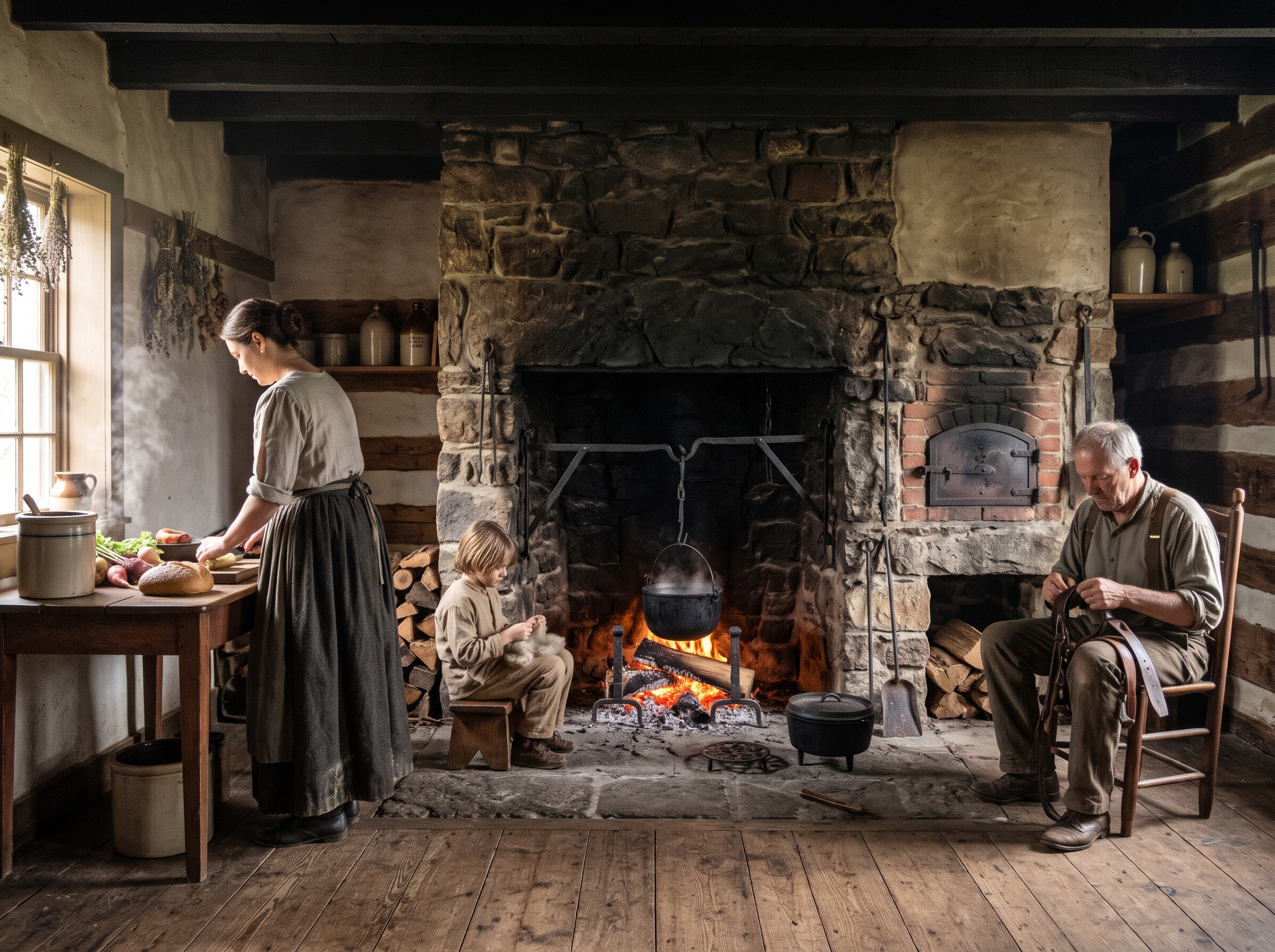
Inside the fireplace opening itself, the engineering was fascinating. You had broad walk-in hearths with swinging iron crane arms that allowed heavy cast-iron pots to be swung out over the embers or pushed back into the heat. You had deep bake ovens—beehive brick chambers set right into the side wall of the chimney stack—that were fired with small hot twigs, swept clean of ash, and then loaded with sourdough loaves that baked entirely on the heat stored in the surrounding bricks. Nearby sat Dutch ovens resting on glowing coals, footed trivets, and hearth-side tin reflector ovens roasting game before the open flame.
A day in the life of a historic hearth followed an unhurried, rhythmic march.
It began in the dark before dawn. The first chore of the day wasn’t lighting a new fire from scratch—flint and steel were a hassle—but carefully unbanking the previous night’s embers. Using an iron poker, someone would scrape away the soft grey ash covering the glowing oak coals saved from bedtime, blow gently until a tiny orange tongue of flame caught a handful of dry pine shavings, and rebuild the blaze.
By mid-morning, the hearth was in full swing. Suspended from the crane hung a heavy, black iron pot—the perpetual soup, or perpetual stew. This wasn’t a static recipe. It was a running culinary conversation that lasted for days or weeks. Into the pot went whatever the homestead yielded: salted pork, root vegetables dug from the cellar sand, dried beans, cornmeal, field herbs, and scraps from yesterday’s meal. It sat over low embers, simmering continuously, smelling of savory broth, wood smoke, and bay leaf, ready to feed anyone coming in cold from the fields.
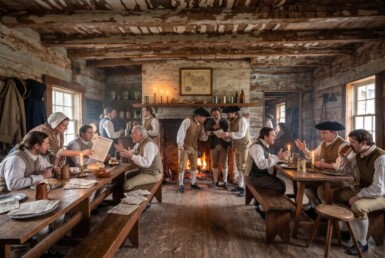
As afternoon faded into dusk, the hearth transformed once again. The work shifted from cooking to light, heat, and family life. The family pulled their chairs close to the stone hearth, the warmest spot in the house. Women mended wool socks or carded cotton by the flickering firelight; men whittled tool handles or oiled harness leather; children sat on low wooden stools listening to stories or reading aloud. The heat stored in the heavy stone facing radiated outward, warming bone and timber alike.
Finally, at bedtime, came the quiet ritual of banking the fire. You didn’t let the fire roar overnight, nor did you let it die out completely. You carefully raked the glowing embers together at the back of the firebox and buried them under a thick blanket of cool ash. This cut off just enough oxygen to keep the coals glowing silently for eight hours without burning through the remaining wood. The house slowly cooled, the stone held its residual warmth, and the hearth slept—waiting for the first morning hands to wake it again.