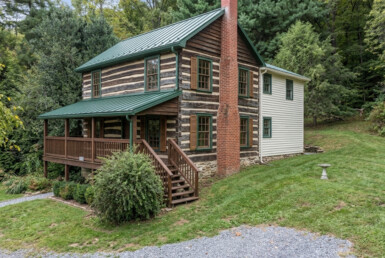
Historic Dr. Charles McGill House Historic References

Heronemous Hildebrand Sells land to Tavern Owner in 1779
Land Record Summary: Lot #8, Jefferson, Frederick County, MD
Here is the details breakdown of the historical land transactions recorded in Frederick County deed records for Heronemous Hildebrand:
| Transaction Field | 1774 Acquisition | 1779 Conveyance |
| Document Type | Deed of Sale / Original Lot Purchase | Deed of Sale |
| Location / Lot | Lot #8, Village of Jefferson, Frederick Co., MD | Lot #8, Village of Jefferson, Frederick Co., MD |
| Grantor (Seller) | Original Lot Developer / Subdivider | Heronemous Hildebrand (Farmer) |
| Grantee (Buyer) | Heronemous Hildebrand (Farmer) | Tavern Owner (Fredericktown) |
| Consideration (Price) | £5 (Maryland currency) | £150 (Maryland currency) |
| Holding Period | — | ~5 years (1774–1779) |
Historical Context: This entry in the Frederick County land records documents the initial settlement phase of Jefferson (originally known as New Town / Trap) prior to and during the Revolutionary War. The substantial jump from £5 in 1774 to £150 in 1779 reflects both period inflation and the commercial development of lot sites along early trade routes.
__________________________________________

Early Days of Trap Town (Jefferson)
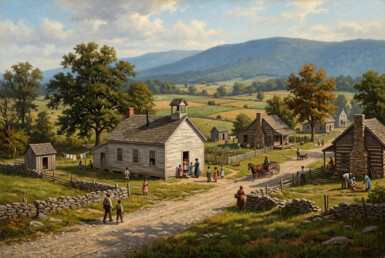
The area today known as Jefferson in Frederick County, Maryland, has a rich 18th-century origin marked by changing boundaries, early land development, and colorful local folklore surrounding its colloquial name, “Trap Town” (or simply “The Trap”).
1. Early Development: New Town and New Freedom
- 1774 (“New Town”): The village was first laid out in 1774 on a 96-acre tract owned by Mrs. Eleanor Medley (platted with the assistance of Leonard Smith). The settlement originally comprised 40 rectangular lots—20 on each side of the main turnpike road (now Maryland Route 180)—stretching between what are today Lander Road and Old Middletown Road.
- 1795 (“New Freedom”): As regional wagon traffic increased, Elias Delashmutt platted an additional 22 lots on the western edge of the original section, calling this extension “New Freedom.”
2. How it Earned the Name “Trap Town”
By the late 18th century, Dennis Griffith’s 1795 map of Maryland officially recorded the community under the name Trap Town. Several explanations account for the moniker:
- The Tavern “Trap”: Positioned strategically along the heavily traveled turnpike connecting Frederick Town to Harpers Ferry and the Potomac crossings, the village quickly became a hub for teamsters, drovers, and travelers. Taverns anchored both the eastern and western entrances to town. Local lore claimed that a traveler entering from either direction would inevitably get “trapped” by the hospitality, drink, or gaming at the taverns before they could pass through to the other side.
- A Turnpike & Mercantile Stop: Livestock drives and freight wagons frequently passed through, leading to vibrant commercial growth, blacksmith shops, and early slaughterhouses (such as Hemp’s Meats, established in 1849). The constant flow of transient traffic also gave the town a rough-and-ready reputation for highway crime, gambling, and brawls during its turnpike heyday.
3. Incorporation and Renaming to Jefferson
- 1831 Incorporation: In 1831, the Maryland General Assembly officially unified “New Town” and “New Freedom” under a single charter, renaming the consolidated village Jefferson (named in honor of Thomas Jefferson).
- 1832 Disincorporation: Just one year after gaining municipal status, the citizens voted to relinquish their municipal charter in 1832, preferring not to maintain a formal town government or collect local municipal taxes. Jefferson has remained an unincorporated community ever since.
Key Historical Characteristics
- Linear Turnpike Layout: Jefferson remains one of Frederick County’s premier examples of an 18th-century “linear turnpike town,” where early structures were built tight against the roadway along a single main artery.
- Architectural Preservation: The historic district spans 18th- and 19th-century architecture, including log structures, Federal-style brick homes, and early commercial storefronts lining Route 180.