The Autumn Call: How the 19th Century Prepped for Winter
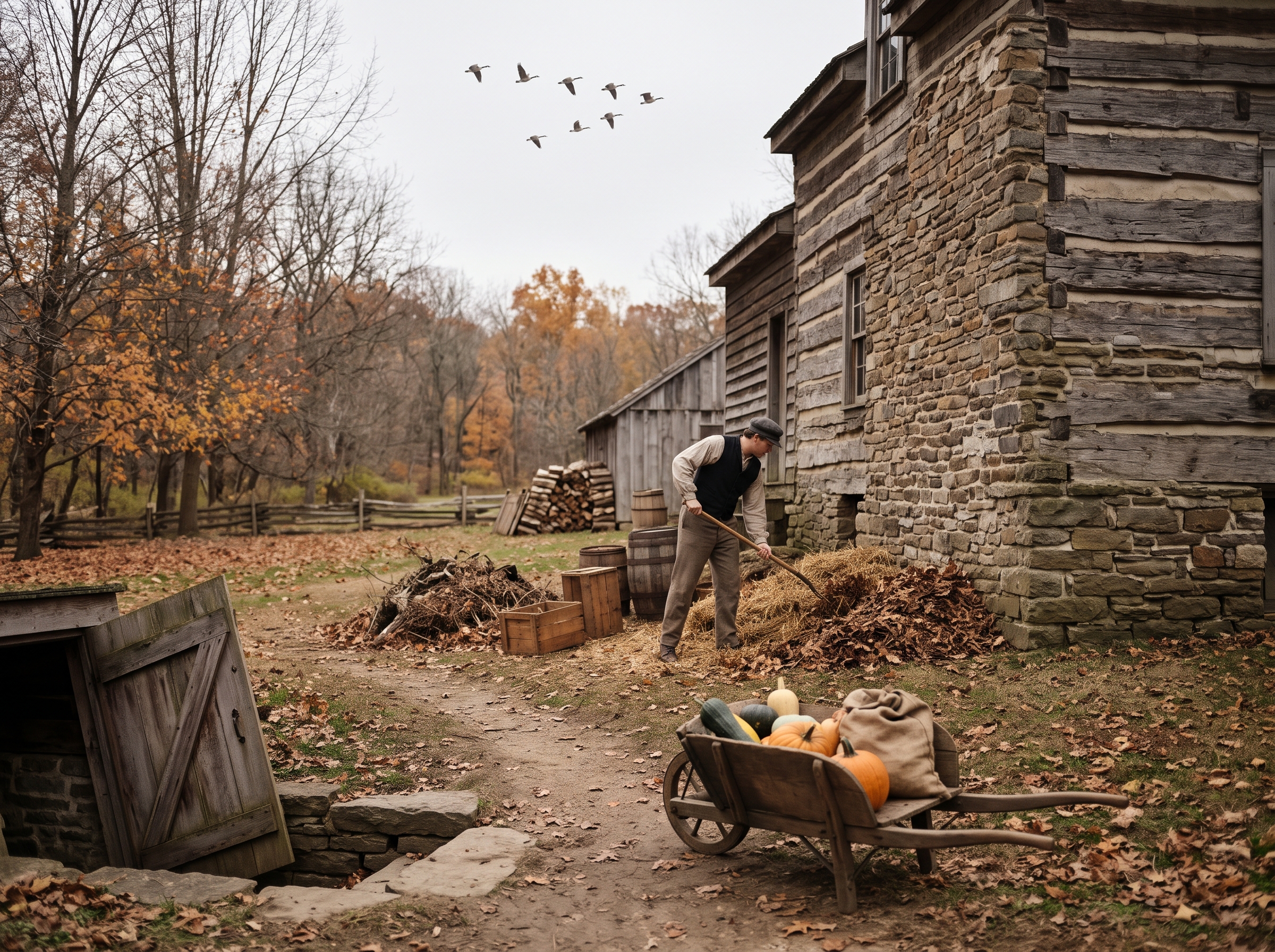
The sound came before I even saw them. Just a faint, sudden barking high above the house, interrupting the quiet of the morning.
I leaned back from my desk and looked out the window. It wasn’t a giant flock, just two geese pushing across a pale sky, their wild crying carrying that cold, sharp clarity you only get when November settles in.
In the nineteenth-century, hearing those geese wasn’t just a pleasant marker of autumn. It was also an alarm.
It was an emphatic decree from the sky: The frost is coming. The window is closing. Get the house ready.
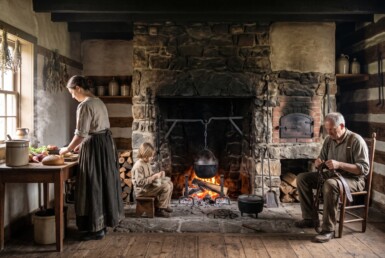
We tend to look back at nineteenth-century autumns with a kind of romantic nostalgia—smoke curling from chimneys, cozy wool blankets, pumpkin patches. But the reality was a lot of work and a quiet race against the calendar. A house back then wasn’t a passive box with a digital thermostat keeping things at a comfortable 70 degrees. It was a living, breathing structure that had to be physically armored, sealed, and provisioned if a family was going to make it through to May.
Long before the first real snow hit, you had to walk the perimeter and inspect every square inch of the building envelope. As the summer heat faded and the ground began to cool, everything shifted. Stone foundations settled, mortar cracked, and log chinking opened up. Homeowners spent late October mixing batches of lime, clay, and horsehair, scraping out loose joints and packing the gaps tight. Leave even a pencil-thin crack near the sill plate, and you’d have freezing winter winds howling across your pine floors for four months straight.
Then came the banking.
Around the exterior base of the house, people would pile whatever they had—dry autumn leaves, corn stalks, straw, heavy evergreen boughs. It didn’t look pretty. But piling that organic matter against the stacked stone walls created a vital dead-air barrier, keeping deep ground frost from creeping under the foundation and freezing everything in the cellar.
Higher up, windows were caulked with strips of old rag or dried river moss. Heavy wool curtains were rehung over exterior doorways, partitioning off rooms so heat could be trapped where people actually slept and worked.
And then there was the wood.
The woodshed wasn’t just filled; it was curated. You didn’t just throw logs in a pile. White oak and hickory were split and set aside for long, slow overnight burns. Quick-burning pine and birch were stacked near the front for getting the hearth roaring on sub-zero mornings. But before a single match was struck, someone had to climb up and sweep the flues clean. Creosote buildup from the year before was a death trap waiting to happen once those fires started burning 24/7.
If the hearth was the warm, beating heart of that historic home, the root cellar was its survival vault.
Stepping down into a cellar in early November meant entering a world of damp earth, sweet apples, and cold stone. Food preservation wasn’t a hobby or a weekend canning project—it was a precise science of temperature, air flow, and touch.
Carrots, parsnips, and beets were dug up after the first light frost, but they weren’t left sitting out in the open air. They were buried in wooden bins filled with damp sand to keep them plump. Apples—varieties like Northern Spy, Roxbury Russet, or Baldwin—were inspected individually by hand. A single bruised skin meant rot, and rot meant gas that would ruin an entire barrel of fruit. So each good apple was wrapped in scrap newspaper or dry oak leaves before being packed away.
Squash and pumpkins sat near the warm kitchen hearth just long enough for their skins to harden into thick casings before going down to the dark shelves below. Out back, as the true cold set in, the smokehouse fires were lit, slowly curing hams and bacon over hickory embers.
Sitting here today warm at my desk, central heat humming quietly in the walls, it’s easy to feel completely detached from all of that. But when those two geese flew past my window, disturbing the morning stillness, something inside me answered.
Those early homeowners understood something we often forget: a house isn’t just shelter from the weather. It’s a partner. It requires attention, forethought, and a deep, working respect for the natural world. Preparing a home for winter wasn’t a chore you outsourced; it was an act of profound intimacy—touching every stone, sealing every gap, handling the harvest piece by piece.
Maybe that’s the real lesson those geese leave behind. It’s not just about how hard people used to work. It’s about how closely they listened. They lived in real rhythm with the sky and the earth—knowing exactly when to gather, when to seal the doors, and when to finally sit by the fire and let the winter come.