Uniontown Maryland – Maryland’s National Register Properties
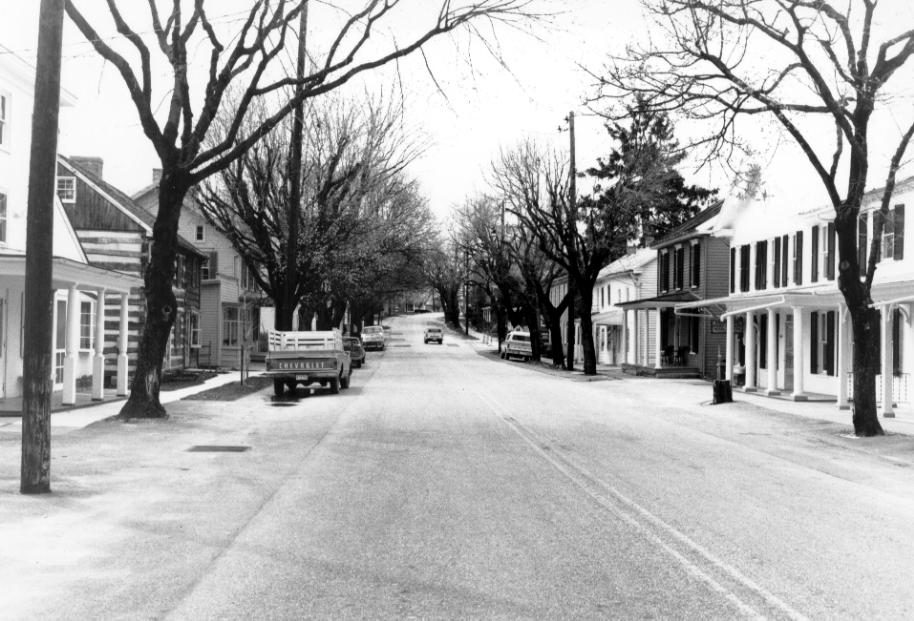
The Uniontown Historic District comprises nearly the entirety of Uniontown, a small community in rural Carroll County, Maryland. The district contains a remarkably cohesive and well-preserved collection of houses, commercial buildings, churches, and schools reflecting the development of this agricultural village from the turn of the 19th century through the 1930’s. The town is laid out in linear fashion along Uniontown Road, which was the main route from Baltimore to Hagerstown in the early 19th century, and extends a short distance along Trevanion Road, the village’s only side street. Buildings are uniformly situated close to the road on shaded lots; open farmland surrounds the settlement on all sides. The buildings in the district are primarily houses, dating from 1802 through the late 19th century, with a few more recent examples reflecting Uniontown’s growth into the early 20th century. Many of the lots feature historic secondary structures such as stables, barns, wash houses, and smokehouses.
Most of the houses conform to the standard vernacular dwelling types which characterized rural contexts in Maryland throughout the 19th century to well into the 20th. Construction materials include log, frame, and brick. While the basic farmhouse form remained constant throughout the period of Uniontown’s development, most houses show the influence of architectural fashion current at the time of their construction in their decorative detailing, which is generally limited to entrances and architraves, porch trim, and cornice details. Several mid-19th century commercial buildings within the district diverge from the pattern by presenting a gabled façade to the street, often with large shop windows flanking the entrance. Other buildings in town present relatively fully articulated examples of various high-style architectural trends.
The Uniontown Historic District is significant as an outstandingly well-preserved example of a linear townscape typical of small settlements in rural north-central Maryland during the 19th century. While it incorporates a handful of significant early 20th century buildings reflecting the most recent phase of the town’s development as a center for social activities and small-scale commerce for the outlying farms, the town is primarily characterized by 19th century houses and community buildings creating a strong impression of a rural village of that period. The district retains a high level of integrity, with extremely few insensitive alterations or intrusions; this superior degree of preservation distinguishes Uniontown among other 19th century agricultural communities of similar size in Carroll County.