History of Burkittsville Maryland
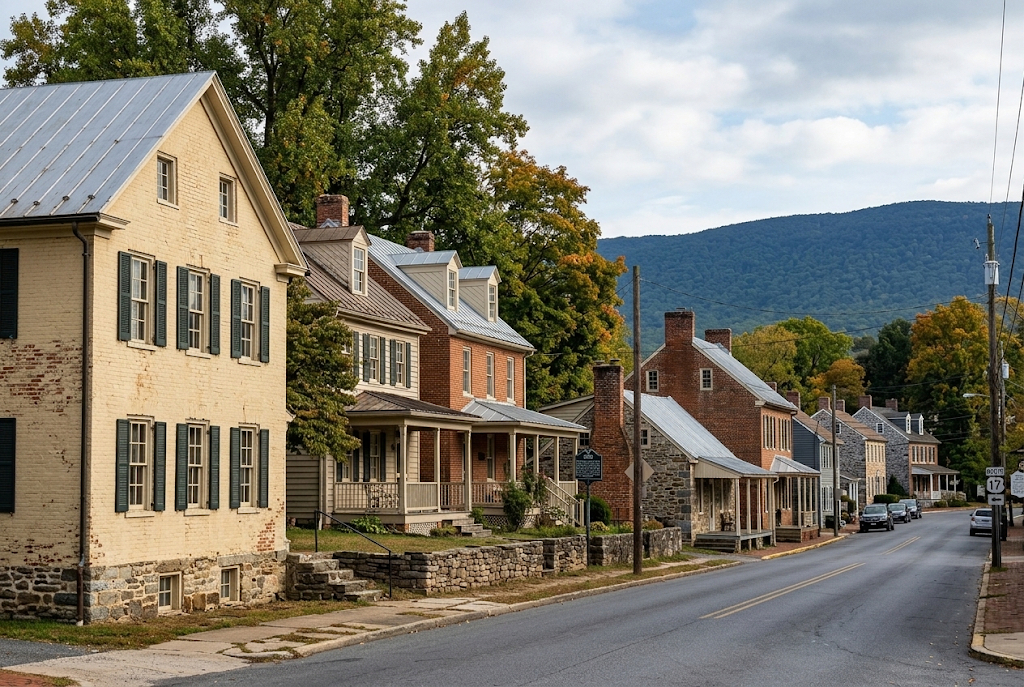
Settled in the fertile Middletown Valley at the eastern base of South Mountain, Burkittsville, Maryland, boasts a rich history spanning over two centuries as an agricultural, commercial, and Civil War crossroads.
Early Settlement and Founding (1700s–1828)
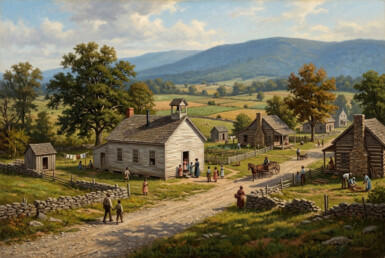
English and German immigrants began acquiring land grants in the region during the early-to-mid 18th century, drawing on fertile soil for wheat farming and orchards along older Native American trail intersections. The town owes its earliest growth to Joshua Harley, who opened a post office at a prominent crossroads around 1824, leading the hamlet to be known briefly as “Harley’s Post.” Following Harley’s death in 1828, neighboring landowner Henry Burkitt expanded the town’s footprint, laid out lots on his property, and officially named the village Burkittsville.
Rural Commerce and Antebellum Growth (1830s–1860)
Throughout the antebellum period, Burkittsville flourished as an essential commercial hub for the surrounding agricultural community. Blacksmiths, tanneries, dry goods stores, wheelwrights, and churches—such as the Resurrection Reformed Church (1829) and St. Paul’s Lutheran Church (1859)—were established to support the growing population.
The Civil War and the Battle of Crampton’s Gap (1862)
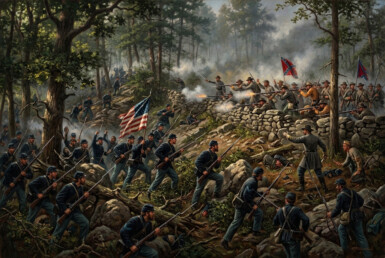
Burkittsville’s most pivotal historical moment arrived during the Maryland Campaign of 1862. On September 14, 1862, Union and Confederate forces clashed directly above the village at the Battle of Crampton’s Gap (part of the Battle of South Mountain). Union forces under Maj. Gen. William B. Franklin broke through Confederate defenses at the mountain pass just three days prior to the Battle of Antietam.
In the immediate aftermath, the small village was transformed overnight into a massive medical field center. Homes, barns, schoolhouses, and the local churches were commandeered as field hospitals to treat hundreds of wounded soldiers from both sides.
Late 19th and Early 20th Centuries
Rebounding after the war, Burkittsville experienced a period of economic revitalisation driven by local rye whiskey distilleries (such as Ahalt’s and Horsey’s distilleries) and regional trade. The town also emphasized education, establishing local academies and seminaries. However, the onset of local and national Prohibition in the late 1910s ended the lucrative distilling trade, and as modern highways bypassed the village later in the 20th century, commercial activity shifted to larger nearby cities.
Modern Preservation
Because minimal modern development occurred during the 20th century, Burkittsville remains one of the most intact 19th-century rural villages in Maryland. The entire town, along with its surrounding battle-field landscape and mountain slope, is listed on the National Register of Historic Places as part of the Crampton’s Gap Historic District. Today, it maintains its quiet, historic character, preserved through local heritage efforts and the South Mountain Heritage Society.