Beds: 2Baths: 1.5Sq Ft: 1776
Homes


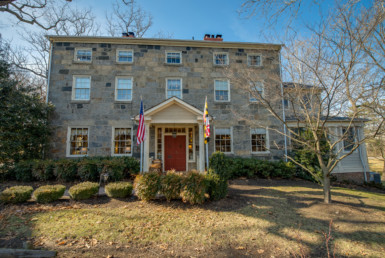
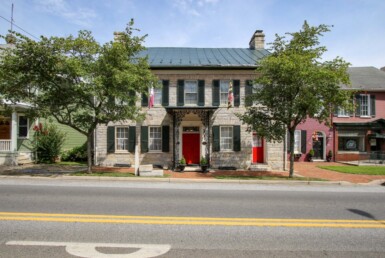
Historic Shildt House (c.1892) – Timeless Victorian Elegance in Taneytown.
Step into a piece of Taneytown history with the Historic Shildt House, originally home to the town’s blacksmith, James Shildt – whose craftsmanship and legacy still echo through this remarkable property. This late-Victorian treasure showcases classic architectural details, including a graceful bump-out, front porch, and ornate millwork that speak to the artistry of its era. Inside, you’ll find 4 spacious bedrooms, 9-foot ceilings, and a thoughtful floor plan featuring dual staircases and two fireplaces, blending historic character with modern comfort.
The primary suite offers a private bath, while the spacious kitchen impresses with stainless steel appliances and abundant cabinetry and butler pantry — the perfect gathering place for family and friends. Throughout the home, original wood floors and replacement windows create a seamless balance between preservation and practicality. Outdoors, the charm continues with a fenced, landscaped backyard featuring tiered gardens, a two-story barn, and a beautifully restored two-story summer kitchen — now converted into an office or creative studio, complete with a fireplace.

Located in the heart of the Taneytown Historic District, the Shildt House is more than a home — it’s a living piece of Maryland’s history, lovingly maintained and ready for its next chapter.
Entry Hall – Wood floor, staircase with original newel post.
Living Room – Wood floor, hanging lamp, double door to Dining Room, crown molding, 1 window, 6 window bump-out.
Dining Room – Wood floor, wood mantel, hanging lamp, crown molding, 2 windows.
Parlor – Wood floor, wood mantel, ceiling fan, pass through to Kitchen, crown molding, 3 windows.
Kitchen –Wood floor, stainless steel appliances, granite counter, chair rail, recessed lighting, breakfast area, fireplace with wood mantel and wood stove, closet, back stairs to second floor, 2 windows.
Butler Pantry – Wood floor, wood counter, sink, 1 window.
Powder Room – Vinyl floor, wood panel, pedestal sink.

2nd Floor
Hall – Wood floor, door to walk-up attic.
Bedroom 1 – Wood floor, ceiling fan, walk-in closet, pass through to Bedroom 2, 1 window, bump-out with 6 windows.
Bedroom 2 – Wood floor, closet, 2 windows.
Hall Bathroom – Ceramic tile floor, bathtub, 1 window.
Bedroom 3 – Wood floor, ceiling fan, chair rail, closet, pass through to Primary Suite, 3 windows.
Bedroom Suite
*Bedroom – Wood floor, closet, 1 window.
*Bathroom – Ceramic tile floor, shower, closet with front load washer & dryer, 1 window.

Attic
Unfinished full attic with wood floor & high ceiling
Basement
Improved cellar
Outbuildings
Vintage 2 Story Barn/Garage (original black smith shop).
Vintage Summer Kitchen (Cottage)
First Floor – Laminate floor, Ceramic tile fireplace with electric stove insert, 2 windows.
Second Floor – Laminate floor, 2 windows.
Attached smoke house (garden shed)


The Shildt House – Home and Forge, c. 1892
Beneath the timeless gable of 58 West Baltimore Street lies the story of a craftsman, a Civil War and Gettysburg Battle veteran, and a chronicler of small-town life. Known historically as the Shildt House, the property was home and workshop to James Shildt, Taneytown’s blacksmith through the late 19th century.
Census and map records show that by 1880, James – then 41 – lived here with his wife Margaret, four stepchildren, and two apprentice blacksmiths, the rhythmic sound of hammer and anvil likely filling the yard each day. His father, Henry Shildt, had worked the same trade before him, marking two generations of Taneytown blacksmiths shaping iron, wagons, and horseshoes for local farms and travelers on the Frederick–Gettysburg road.
In 1892, a beam bearing that date – and the mark of its original carpenter – was set into the porch, likely commemorating a rebuild or expansion of the home and shop. The house standing today reflects that late-Victorian reconstruction: solid, symmetrical, and imbued with the quiet pride of hand craftsmanship.
Shildt’s story extends beyond the forge. During the Civil War, he served as a Corporal in Company I of the 8th Maryland Infantry, enlisting in 1862 and serving until 1863, not long after the Battle of Gettysburg. Decades later, his name appeared again in print – not as a soldier, but as a correspondent for the Union Bridge Pilot newspaper, sharing community happenings and reflections from Taneytown.
He lived out his years in the same town he and his father helped to build, passing away in 1917 at the age of 78 and was remembered in the announcement as a “genial and kindly man.” He was laid to rest in the Taneytown Reformed Cemetery, across the
Today, 58 West Baltimore Street carries forward that lineage of craftsmanship and community – a true piece of living history, where the glow of the forge once shone, and the stories of a Civil War veteran and small-town journalist continue to echo through time.

Significance
The Taneytown Historic District is significant as a representative example of a major commercial center in Piedmont Maryland from the late 18th century settlement period through the early 20th century. The district embodies the distinctive characteristics of town planning in the Pennsylvania – cultural region. Its founding in 1 762 occurred as a result of its commercially advantageous location along two early transportation routes, one of which was the Monocacy Road, a major migration route for the Pennsylvania Germans. Its town plan, architecture, and history of the late 18th and early 19th centuries are strongly influenced by the Pennsylvania German culture. The arrival of the railroad in 1872 opened a second era in the history of the community also linked to its role as a commercial and transportation center in Piedmont Maryland. Many of the commercial buildings in the community date from the late 19th and early 20th centuries and reflect the rural Victorian prosperity of the railroad era in Taneytown. National influences on Taneytown’s architecture continued through 1936 with the construction of utilitarian commercial and industrial buildings.
more…
Brief History
Taneytown was founded by Edward Diggs and Raphael Taney in 1762. The site for the town was established at the intersection of two important transportation routes. The north-south route was the Monocacy Road which began as an Indian Trail, the Conestoga Path. During the 1730’s and 1740’s, this road figured prominently in the migration of Pennsylvania Germans from central Pennsylvania to the south where new land was available for settlement. The trail was improved to a wagon road that led from the mouth of the Monocacy River to the Susquehanna River. After the French and Indian War, this road was heavily traveled and a number of towns were founded along its route in the 1760’s.
The east-west route which ran from Baltimore to Westminster to Uniontown to Taneytown and then west to Emmitsburg, was not as important as the Monocacy Road in the early years of settlement. This route, however, gained in importance in the early nineteenth century when it was improved and it became significant for westward expansion. In 1817, the Westminster, Taneytown and Emmitsburg. Turnpike Company was formed to finance improvements to this road. In 1852, the Westminster and Taneytown Turnpike Company began construction of a plank road along this route. By the mid-19th century, this road had become more significant than the Monocacy Road as a transportation route through Taneytown – a status that it retains today.
more…
Updated on January 13, 2026 at 7:38 am




 Historic Shildt House c.1892 - 58 West Baltimore Street, Taneytown, Carroll County, Maryland, 21787, United States