The Battle of South Mountain & Crampton’s Gap
Fought on September 14, 1862, the Battle of South Mountain—encompassing the key mountain passes at Turner’s, Fox’s, and Crampton’s Gap—was a critical turning point in Robert E. Lee’s first Northern invasion during the Maryland Campaign.
1. Strategic Trigger: The Lost Order & A Divided Army
After General Lee divided the Army of Northern Virginia to capture the Federal garrison at Harpers Ferry, Union Major General George B. McClellan unexpectedly discovered a lost copy of Lee’s operational plan (Special Order 191). Realizing Lee’s forces were separated, McClellan launched a rapid advance west toward the South Mountain range to force his way through the gaps and defeat the Confederate segments individually.
2. The Role of Crampton’s Gap
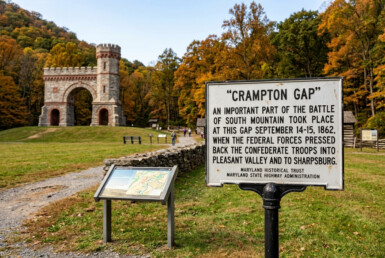
Located directly above the village of Burkittsville at the southern end of the battlefield, Crampton’s Gap held immense operational importance:
- The Mission: Major General William B. Franklin’s VI Corps was tasked with smashing through Crampton’s Gap to quickly relieve the besieged Federal garrison at Harpers Ferry, just six miles to the southwest.
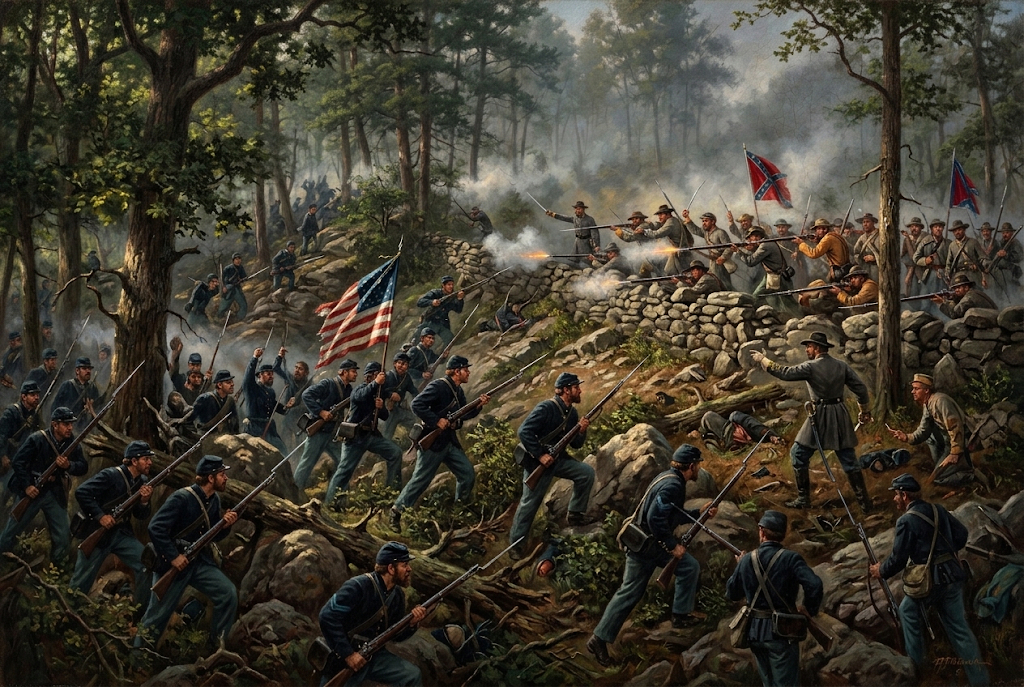
- The Breakthrough: Outnumbering the thin Confederate defense under Brigadier General Howell Cobb, Federal troops made a headlong assault up the eastern slope, dislodging defenders from behind stone walls and driving them down into Pleasant Valley by nightfall.
- The Stalling Action: Although Franklin broke through, he hesitated to push further into Pleasant Valley, suspecting a much larger enemy presence. This short delay gave Confederate Major General Lafayette McLaws enough time to complete the surrender of Harpers Ferry on September 15 before reuniting with Lee.
3. Strategic Consequences & Legacy
- Setting the Stage for Antietam: While Confederate forces fought delaying actions at Turner’s and Fox’s Gaps, Lee ultimately lost all three passes and was forced to order a night retreat down the mountain. The day-long stand, however, bought Lee vital time to regroup his scattered forces along Antietam Creek near Sharpsburg.
- First Major Victory on Northern Soil: South Mountain provided a much-needed tactical and psychological victory for the Union Army of the Potomac, bolstering Northern morale after the defeat at Second Manassas.
- Humanitarian & Preservation Impact: In the aftermath, surrounding villages like Burkittsville were transformed into emergency medical field centers, with homes, churches, and barns serving as field hospitals. Today, the battlefield terrain at Crampton’s Gap remains remarkably well-preserved as part of the National Register Crampton’s Gap Historic District and Gathland State Park.